












|
 |

Sailor's Return
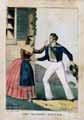 |
的赛lor's Return
Nathaniel Currier, lithographer and publisher
The Mariners' Museum
|
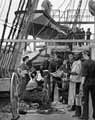 |
Sailors Buying Souvenirs
1892 Rufus Fairchild Zogbaum From"All Hands": Pictures of Life in the United States Navy, 1897
The Mariners' Museum Research Library and Archives
|
As they traveled around the world, sailors often made or purchased mementos of their travels for their loved ones back home. During their idle time on board ship, many men carved bone or ivory into trinkets or useful household items such as pie crimpers or winding swifts. Items that were commonly bought in ports of call included Liverpool jugs, glass rolling pins, and ornate "sailor's valentines" from the island of Barbados.
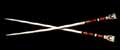 |
Knitting Needles
Ivory and wood scrimshaw
The Mariners' Museum, William H. Macy Collection
|
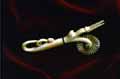 |
Jagging Wheel
嵌象牙和珍珠母雕刻
The Mariners' Museum
|
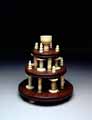 |
Ivory Spool Holder
The Mariners' Museum, William H. Macy Collection
|
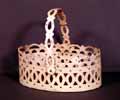 |
Sewing Basket
Whale ivory scrimshaw
The Mariners' Museum
|
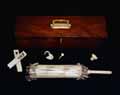 |
Winding Swift
Whale ivory and wood scrimshaw
The Mariners' Museum
|
Women used winding swifts to roll yarn from a skein into a ball. The winding swift clamped to a table, so extra hands were not needed.
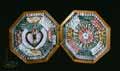 |
Sailor's Valentine
circa 1880 Shells, fabric, and wood
The Mariners' Museum,
Gift of Descendants of Captain David Chapin Warren, The Ten Broeck Family |
Sailors' valentines like this one were once thought to have been made by sailors as gifts, but research shows that many of the shellwork pieces were probably made as nautical souvenirs by enterprising artisans on the island of Barbados. Some valentines carry the classic phrases "When this you see, remember me" or "Forget me not." The owner of this sailor's valentine (which reads "Souvenir from Barbados") was David Chapin Warren, a sea captain who sailed between the northeast United States and tropical ports, often accompanied by his wife and two children.
Activity:
Discussion question:
If you were going on vacation, what would you bring home as souvenirs? If you lived in the nineteenth century, what could you bring home as souvenirs?
|
|
Section 4 of 4 |Next Page >>
|
|


