
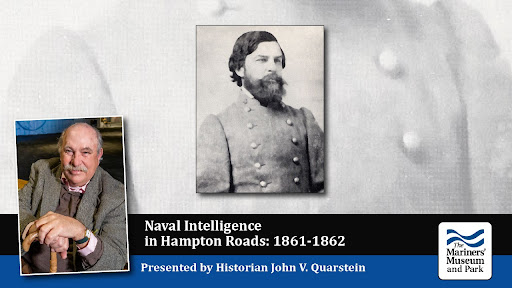
Naval Intelligence in Hampton Roads: 1861-1862

Posted on
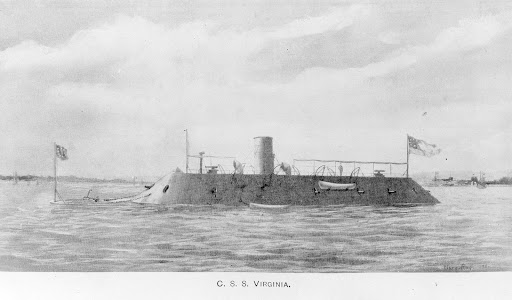
CSS弗吉尼亚.
The Mariners’ Museum.

There was no formal naval intelligence system established during the American Civil War. While a few examples exist of Northern sympathizers, free Blacks, like Mary Louvestre of Portsmouth, sent messages to various Union commanders about the Confederate ironclad construction effort. These links were unofficial and were generally between one Union officer and an individual. The Union nor the Confederacy needed to rely on such clandestine methods since Northern and Southern newspapers provided ample information, usually in a boastful manner. Each antagonist simply needed to obtain a copy ofThe New York Timesor移动寄存器to gather all they needed to know about ironclad development.

联盟情报能够获得有关的宝贵知识CSS的建设和即将攻击Virginia. The information appeared to flow back and forth across Hampton Roads. On October 6, 1861, Major General John Ellis Wool, stationed at Fort Monroe as commander of the Union Department of Virginia, wrote to Lieutenant General Winfield Scott:阅读更多

捕获哈特拉斯入口

Posted on
Map of Cape Hatteras. Courtesy of weather.com

内战的第一个合并行动是占领哈特拉斯入口。同盟炮舰和私人商人在北卡罗来纳州哈特拉斯角航行时使用了此入口。这些南方商业突袭者的折旧对卡罗来纳人来说是有利可图的。但是,北方的损失变得如此重大,以至于几个主要的海上保险经纪人要求对这种情况做些事情。这促使工会的哈特拉斯入口行动的发展。[1]

北卡罗来纳’s Outer Banks

The North Carolina Sounds reached from the Virginia border to Cape Lookout, the eastern border of North Carolina. Four major inlets could be used to reach the Atlantic Ocean from the Sounds: Hatteras, Oregon, Ocracoke, and Beaufort (Old Inlet). Hatteras Inlet was best situated for commerce raiding. Cape Hatteras was the easternmost point within the Confederacy, overlooking the Gulf Stream. This current was very popular with merchant ships trading between Northern ports like New York, the Caribbean, and South America. Using the Cape Hatteras Lighthouse, the Confederates could signal waiting raiders about tempting merchantmen targets. “The enemy’s commerce,” wrote North Carolina governor John Ellis on April 27, 1861, “could be cut off by privateers on the coast of No. Carolina.” [2]阅读更多

Tied up in rope conservation and more!

Posted on
SEM at ARC William and Mary
莫莉小心地将木制样品插入SEM室和显示先前样品图像的计算机监视器

I have been meaning to write a blog about progress on theMonitor绳索但是,尽管考古对象目前专注于该系列的这一部分,但我们做了各种各样的其他事情,我认为与您分享也很有趣。

If you have not done so yet, check out Laurie’s最新的博客关于她最近一直在治疗的枪海绵。看起来很好!阅读更多

伯恩赛德的北卡罗来纳州探险:从新伯尔尼到博福特

Posted on
Ambrose Burnside. Courtesy of the Library of Congress,

这是我分享的故事的延续另一个博客about the Burnside Expedition and the battle for the NC Sounds and the capture of Roanoke Island.

Brigadier General Ambrose E. Burnside’s invasion of the North Carolina内陆海是一个重大成功。在七天的时间里,伯恩赛德(Burnside)在戈德斯伯勒(L.M. Goldsborough)的海军部队的支持下,捕获了库里塔克(Currituck),阿尔伯马尔(Albemarle),罗阿诺克(Roanoke)和克罗地亚(Croatan)的声音。这使伯恩赛德的军队占据了他的下一个目标,北卡罗来纳州的新伯尔尼。阅读更多

伯恩赛德的罗阿诺克岛探险:北卡罗来纳州的战斗

Posted on
从弗吉尼亚州的诺福克到北卡罗来纳州的Bogue Inlet,1874年。
Nathaniel H. Bishop的纸独木舟航行,https://www.ibiblio.org/eldritch/nhb/paperc/intro.html#maps。

乔治·B·麦克莱伦少将认识到有必要合并行动以压倒同盟战争的努力。有超过3,000英里的海岸线防守,南方人通常无法有效保护其海岸领土。Hatteras Inlet和Royal Sound港的捕获是决定性的,这进一步推进了Winfield Scott将军的Anaconda计划。准将安布罗斯·伯恩赛德(Ambrose Burnside)的罗阿诺克岛探险队(Roanoke Island Expedition)将在同盟国的核心中罢工。征服北卡罗来纳州内陆海洋的这一努力将在1862年结束战争。

The Great Inland Sea

哈特拉斯入口的丧失是北卡罗来纳州的粗鲁觉醒。联邦政府突然完全可以访问声音,控制着各种浅水物体的钥匙是罗阿诺克岛,位于阿尔伯马尔和库里托克声音的汇合处。这些大声的声音导致诺福克和弗吉尼亚州的朴次茅斯通过大萧条的沼泽和阿尔伯马尔和切萨皮克运河。这是南部最大的造船中心的后门,是与里士满的直接联系。这些声音使北卡罗来纳州河港口(例如伊丽莎白市,伊登顿和普利茅斯)获得了关键的机会。阅读更多